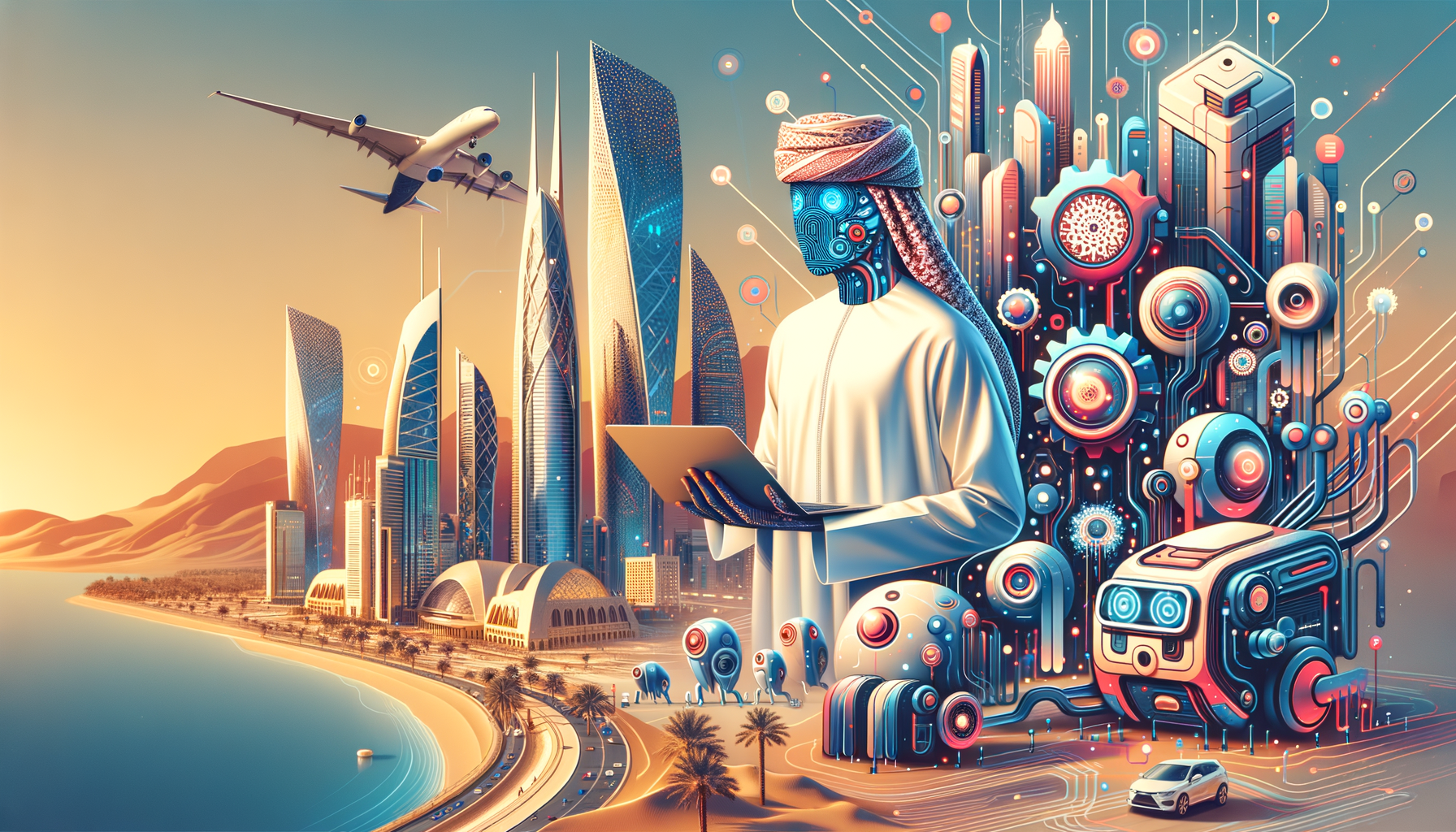
The Rise of Generative AI in Oman
As Oman navigates its ambitious Vision 2040, the integration of generative AI into its economic fabric signals a transformative shift. The Oman National Programme for AI, running through 2026, underscores this commitment by laying the groundwork for a future where artificial intelligence is a pivotal driver of innovation and economic growth. This strategic initiative reflects a broader regional trend, where the Gulf Cooperation Council (GCC) countries are increasingly embracing AI technologies to diversify their economies away from oil dependency. For Oman, the stakes are significant. The Ministry of Transport’s goal of creating 30,000 AI-related jobs and achieving a $5 billion economic impact by 2030 highlights the potential of generative AI to spur not only technological advancement but also socio-economic development.
The Oman Digital Triangle Initiative, which envisions the establishment of three interconnected digital zones, is a testament to the country’s proactive approach in fostering an environment conducive to AI business applications. This initiative is designed to accelerate the adoption of AI by providing a robust infrastructure and a collaborative platform for innovation. By aligning with the Tahawul digital transformation program, these digital zones aim to create a thriving ecosystem where businesses, government entities, and educational institutions can collaborate and innovate using AI technologies. The integration of generative AI into this framework is expected to enhance operational efficiencies, drive creativity, and unlock new business models across various sectors.
Generative AI, with its ability to create content, designs, and even ideas that mimic human creativity, is particularly well-suited to address some of Oman’s unique challenges and opportunities. From enhancing customer service through AI-driven chatbots to optimizing supply chain operations with predictive analytics, the applications are vast and varied. In the context of Vision 2040, generative AI is poised to play a critical role in achieving the country’s strategic objectives of economic diversification, technological innovation, and human capital development.
Strategic Applications Across Key Sectors
In the financial sector, generative AI is transforming how banks and financial institutions operate in Oman. By leveraging advanced algorithms to analyze vast datasets, these institutions can personalize customer experiences, enhance risk management processes, and streamline operations. The ability of generative AI to generate predictive insights and automate complex financial analyses offers a significant competitive advantage in a market that is increasingly driven by digital innovation. Moreover, as Oman continues to enhance its financial regulatory framework to accommodate AI technologies, the sector is poised for substantial growth and transformation.
The healthcare industry in Oman also stands to benefit immensely from the integration of generative AI. The technology’s capability to process and interpret large volumes of medical data can lead to more accurate diagnostics, personalized treatment plans, and improved patient outcomes. With the Oman Vision 2040 emphasizing healthcare as a priority sector, the adoption of AI-driven solutions can help address critical challenges such as resource allocation, disease management, and healthcare accessibility. Generative AI can also play a crucial role in medical research and drug discovery, further enhancing Oman’s standing as a center for innovation in the region.
In the manufacturing sector, generative AI is revolutionizing production processes by enabling greater automation and efficiency. The ability to design complex products using AI-driven tools can significantly reduce time-to-market and increase product quality. As Oman seeks to develop its industrial base and reduce reliance on imports, generative AI offers a pathway to achieving these objectives by enhancing local manufacturing capabilities. The Oman Digital Triangle Initiative provides the necessary infrastructure to support the integration of AI technologies into manufacturing processes, fostering collaboration and innovation across the industry.
Challenges and Opportunities in AI Adoption
Despite the promising potential of generative AI, its adoption in Oman is not without challenges. One of the primary hurdles is the need to develop a skilled workforce capable of leveraging AI technologies effectively. The Ministry of Transport’s target of creating 30,000 AI-related jobs underscores the importance of investing in education and training programs to equip Omani nationals with the necessary skills. Collaborations between government, academia, and the private sector are essential to building a talent pipeline that can support the country’s AI ambitions.
Data privacy and security are also critical considerations in the deployment of generative AI solutions. As Oman advances its digital transformation agenda, ensuring the protection of sensitive data and maintaining public trust in AI systems are paramount. The establishment of robust legal and regulatory frameworks is necessary to address these concerns and create a secure environment for AI innovation. The Omani government’s ongoing efforts to update its regulatory landscape to accommodate AI technologies demonstrate a commitment to fostering a safe and ethical digital ecosystem.
Moreover, the successful integration of generative AI requires overcoming cultural and organizational barriers to change. Businesses in Oman must embrace a culture of innovation and agility to fully capitalize on AI-driven opportunities. This involves rethinking traditional business models, adopting new technologies, and fostering a mindset that values continuous learning and adaptation. By aligning with Vision 2040’s objectives, companies can position themselves to thrive in an increasingly digital economy.
The Road Ahead for Generative AI in Oman
As Oman continues to navigate its digital transformation journey, generative AI is set to play an increasingly important role in shaping the country’s economic landscape. By aligning with the strategic goals of Vision 2040, businesses and government entities can harness the power of AI to drive innovation, enhance competitiveness, and create new opportunities for growth. The Oman National Programme for AI, coupled with initiatives like the Oman Digital Triangle, provides a strong foundation for advancing AI adoption across industries.
The potential of generative AI to transform industries and improve quality of life in Oman is immense. From revolutionizing healthcare delivery to enhancing financial services and boosting manufacturing capabilities, the applications of AI are diverse and far-reaching. By fostering a culture of collaboration and innovation, Oman can position itself as a leader in AI-driven transformation within the GCC region.
In conclusion, the integration of generative AI into Oman’s business landscape offers a pathway to achieving the country’s strategic objectives and realizing the full potential of Vision 2040. As stakeholders across the public and private sectors work together to overcome challenges and seize opportunities, the future of AI in Oman looks promising. Businesses are encouraged to engage with the evolving AI ecosystem, invest in talent development, and explore innovative applications to unlock new value and drive sustainable growth.