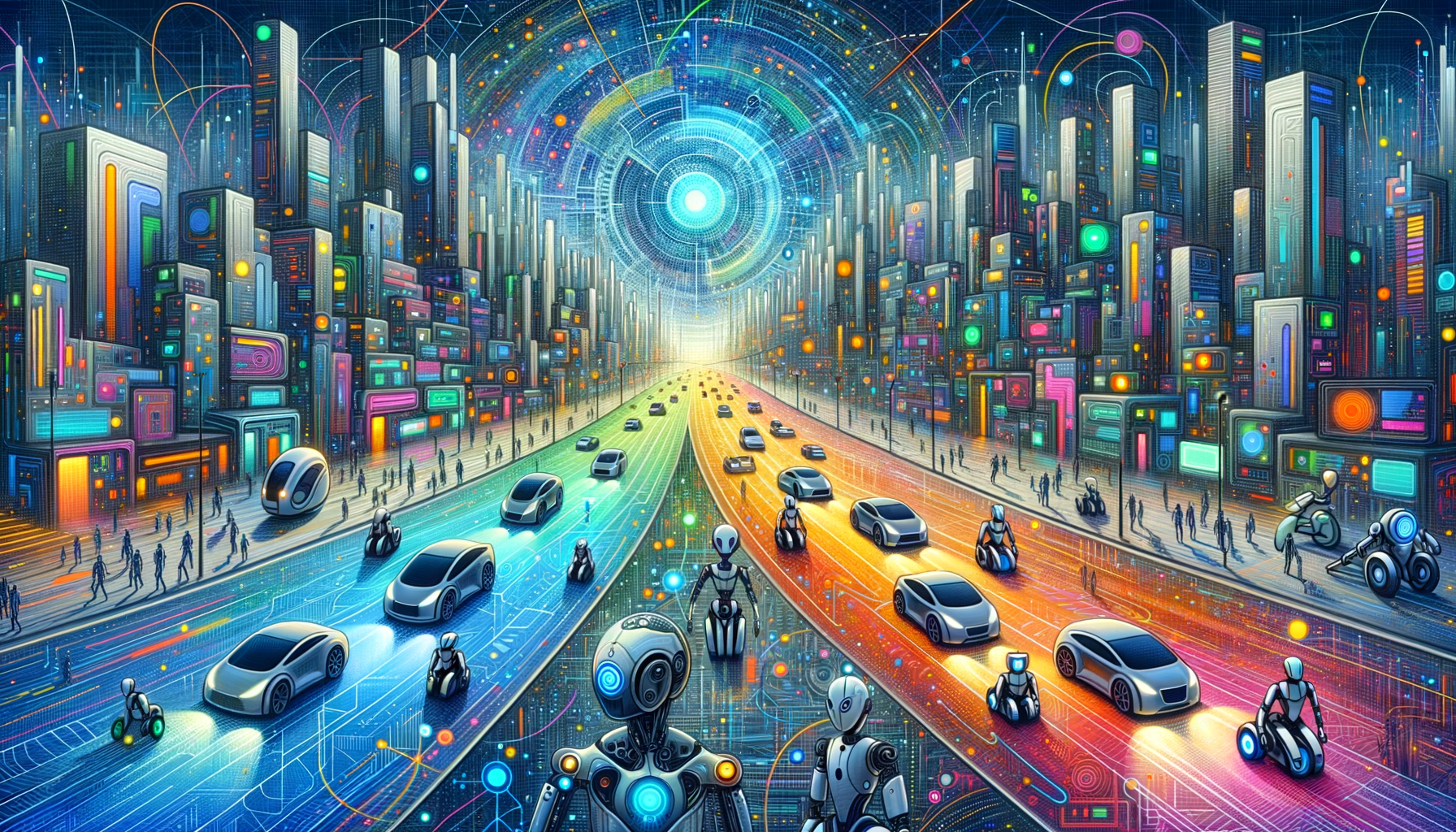
The Evolution of AI Agents
In the landscape of technological advancement, AI agents have emerged as pivotal players, driving the evolution of autonomous systems. By 2026, these systems have become integral across various sectors, from healthcare to transportation, reshaping how industries operate. The journey of AI agents began with simple rule-based algorithms that gradually evolved into complex machine learning models capable of making independent decisions. Today, the sophistication of these agents is underscored by their ability to learn and adapt, characteristics that enable them to perform tasks with minimal human intervention.
The progress in AI technology is not merely a tale of technical brilliance but also of strategic implementation. Companies have increasingly recognized the efficiency gains and cost reductions that autonomous systems offer. For instance, in logistics, AI-driven robots optimize supply chain processes, reducing delivery times and enhancing customer satisfaction. Such implementations demonstrate the transformative potential of AI agents, which continue to expand their capabilities and influence.
Underpinning these advancements are breakthroughs in computational power and data accessibility. The proliferation of cloud computing and edge computing allows AI systems to process vast amounts of data in real-time, making them more responsive and effective. Furthermore, the integration of AI with the Internet of Things (IoT) has spawned intelligent environments where AI agents operate seamlessly within interconnected networks, enhancing their utility and effectiveness.
Autonomous Systems in Daily Life
The integration of autonomous systems into daily life has reached unprecedented levels, blurring the lines between science fiction and reality. Autonomous vehicles, once a distant dream, are now a common sight in urban landscapes. These vehicles leverage AI to navigate complex environments, ensuring safety and efficiency. The impact on urban planning and infrastructure is profound, as cities adapt to accommodate these new modes of transport, leading to more sustainable urban ecosystems.
Healthcare has also been revolutionized by AI agents. Intelligent diagnostic systems assist doctors by analyzing patient data with incredible accuracy, leading to early detection of diseases and personalized treatment plans. This shift not only enhances patient outcomes but also alleviates the burden on healthcare professionals, allowing them to focus on more nuanced aspects of patient care. The expansion of telemedicine, powered by AI, further exemplifies the role of autonomous systems in enhancing accessibility and convenience in healthcare.
In the realm of personal technology, AI assistants have become indispensable, managing schedules, providing information, and even facilitating social interactions. These systems have grown increasingly adept at understanding and responding to natural language, making them more user-friendly and effective. The convenience offered by these AI agents has fundamentally altered the way individuals interact with technology, making daily tasks more manageable and efficient.
Ethical and Societal Implications
As AI agents and autonomous systems continue to permeate various aspects of life, they bring with them significant ethical and societal considerations. The delegation of decision-making to machines raises questions about accountability and transparency. In scenarios where AI systems make critical decisions, such as in autonomous driving or healthcare, understanding the rationale behind these decisions is crucial. This has prompted calls for more robust frameworks to ensure that AI systems operate within ethical boundaries.
The potential for job displacement is another concern, as autonomous systems take on roles traditionally filled by humans. However, experts argue that while some jobs may be lost, new opportunities will emerge, particularly in fields related to AI development and oversight. The challenge lies in ensuring that the workforce is equipped with the skills necessary to thrive in an AI-driven economy. Education and training programs focused on AI literacy and technical skills are essential in this transition.
Furthermore, the deployment of AI systems must consider biases that could arise from data-driven decision-making. Ensuring that AI models are trained on diverse and representative datasets is vital to avoid perpetuating existing inequalities. As with any transformative technology, the integration of AI agents demands a delicate balance between innovation and ethical responsibility.
The Future of AI Agents and Autonomous Systems
Looking ahead, the trajectory of AI agents and autonomous systems is poised for continued growth and innovation. The convergence of AI with other emerging technologies, such as quantum computing and blockchain, promises to unlock new possibilities. Quantum computing, with its unparalleled processing power, could enhance the capabilities of AI systems, enabling them to solve problems previously deemed intractable. Meanwhile, blockchain technology offers potential solutions for enhancing the security and transparency of AI-driven processes.
The concept of AI agents collaborating with humans in a synergistic partnership is also gaining traction. Rather than replacing human roles, AI systems can augment human capabilities, leading to new forms of creative and productive collaboration. This vision of the future emphasizes the importance of designing AI systems that are not only autonomous but also aligned with human values and goals.
As we navigate the opportunities and challenges presented by AI agents and autonomous systems, it is imperative to foster a dialogue that includes diverse perspectives. Policymakers, technologists, and the public must collaborate to shape a future where AI contributes positively to society. Encouragingly, initiatives focused on AI ethics and governance are already underway, laying the groundwork for responsible AI development. By embracing innovation while adhering to ethical principles, we can harness the full potential of AI agents to create a more equitable and sustainable future.
The rapid advancement of AI agents and autonomous systems invites both excitement and caution. As we stand on the brink of a new era in technology, the choices we make today will shape the world of tomorrow. Embracing the promise of AI, while remaining vigilant about its implications, is the path forward in this dynamic technological landscape.