
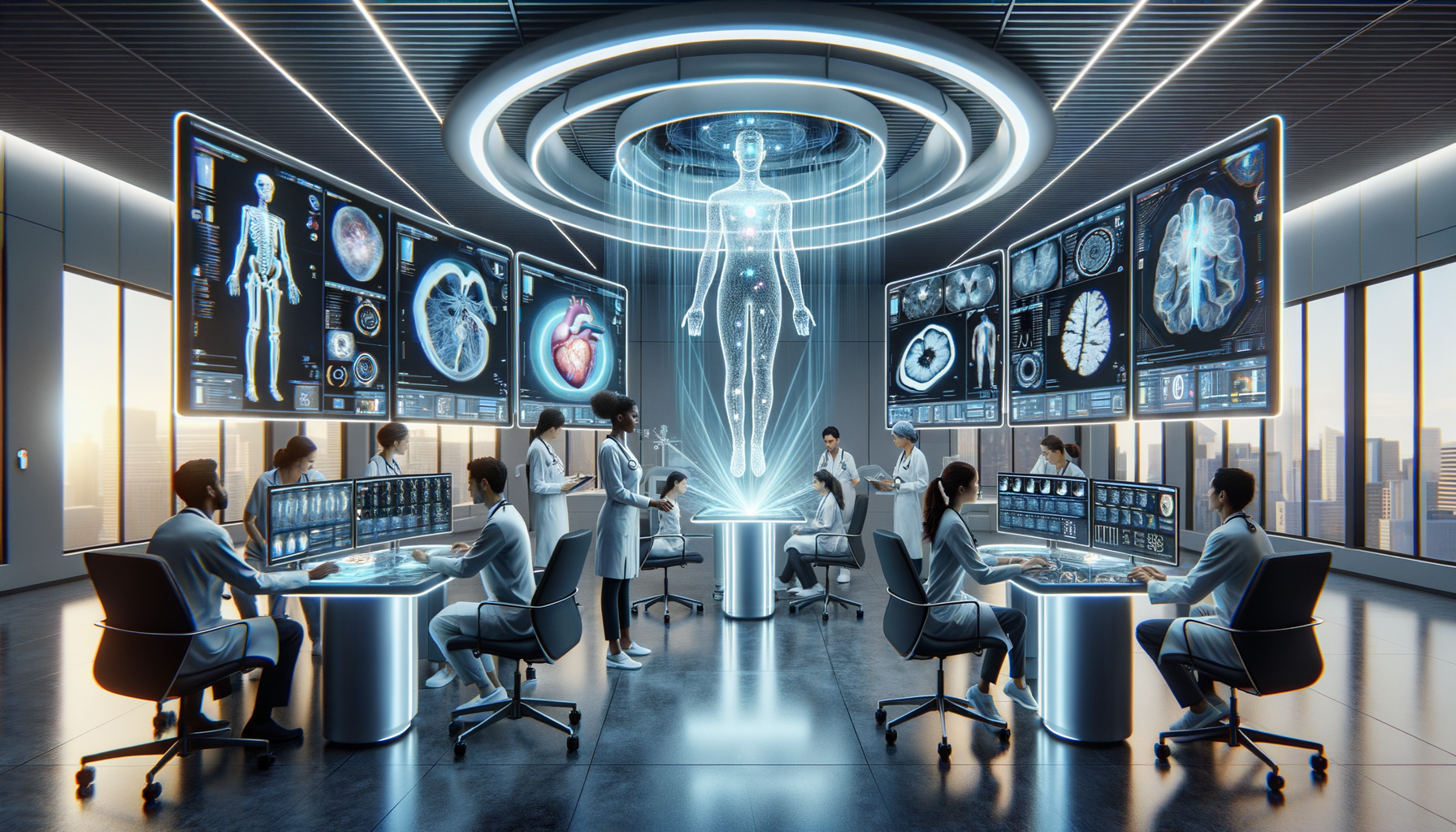
The Evolution of AI in Medical Diagnostics
In the past decade, artificial intelligence has emerged as a transformative force in the medical field, particularly in the realm of diagnostics. As we stand in 2026, the integration of AI into healthcare diagnosis is no longer a vision of the future but a present-day reality reshaping the landscape of medical practice. AI-driven diagnostic tools have become invaluable assets, enhancing the accuracy and speed of disease detection and offering unprecedented insights into patient health.
The journey of AI in healthcare began with its ability to handle vast amounts of data, a task that would be insurmountable for human practitioners alone. AI algorithms are now capable of sifting through complex datasets, identifying patterns, and making predictions with remarkable precision. These advancements have led to the development of sophisticated diagnostic systems that can detect anomalies in medical imaging, analyze genetic information, and even predict patient outcomes based on historical data.
By 2026, AI’s role in diagnostics has expanded beyond mere data analysis. Machine learning models are now being utilized to train AI systems to recognize subtle indicators of disease that may be overlooked by traditional diagnostic methods. This capability is particularly beneficial in early-stage disease detection, where early intervention can significantly improve patient prognosis. Furthermore, AI’s ability to continuously learn and adapt ensures that diagnostic accuracy improves with each new piece of data processed.
The Impact on Clinical Practice
The integration of AI into healthcare diagnosis has had profound implications for clinical practice. Physicians today are leveraging AI tools to augment their diagnostic capabilities, allowing for more precise and timely decision-making. This collaboration between human expertise and machine efficiency is redefining the doctor-patient relationship, where AI acts as an ally to healthcare professionals rather than a replacement.
AI’s influence extends to various medical specialties, with radiology and pathology being among the most impacted. In radiology, AI algorithms analyze medical images with a level of detail that surpasses human capabilities, identifying potential issues with a high degree of accuracy. In pathology, AI systems assist in examining tissue samples and detecting cancerous cells, providing pathologists with crucial information that aids in diagnosis and treatment planning.
Moreover, AI’s predictive capabilities are being harnessed to anticipate disease outbreaks and manage public health crises. By analyzing trends and patterns in real-time, AI systems provide healthcare authorities with actionable insights that inform public health strategies and resource allocation. This proactive approach to healthcare management is instrumental in mitigating the impact of infectious diseases and other health emergencies.
Challenges and Ethical Considerations
Despite the numerous benefits of AI in healthcare diagnosis, several challenges and ethical considerations must be addressed to ensure its responsible deployment. One of the primary concerns is the potential for algorithmic bias, where AI systems may inadvertently perpetuate existing healthcare disparities. Ensuring diversity in training datasets and implementing rigorous testing protocols are essential steps in mitigating this risk.
Privacy and data security remain critical issues as well. The vast amounts of sensitive patient data required to train AI systems necessitate robust safeguards to prevent unauthorized access and protect patient confidentiality. Regulatory frameworks and industry standards are evolving to address these concerns, but maintaining public trust is paramount.
Furthermore, the ethical implications of AI decision-making in healthcare cannot be overlooked. While AI can provide valuable diagnostic insights, the ultimate responsibility for patient care and treatment decisions lies with human practitioners. Striking the right balance between AI assistance and human oversight is crucial to ensuring ethical and effective healthcare delivery.
Future Prospects and Innovations
As AI technology continues to evolve, its potential applications in healthcare diagnosis are expanding. Researchers are exploring the use of AI in personalized medicine, where diagnostic tools are tailored to individual patient profiles, leading to more effective and targeted treatment plans. The integration of AI with wearable technology and IoT devices is also on the horizon, promising to revolutionize remote patient monitoring and chronic disease management.
Innovations in natural language processing (NLP) are enhancing AI’s ability to interpret unstructured data, such as clinical notes and patient histories, further enriching the diagnostic process. This capability enables AI systems to provide clinicians with a comprehensive understanding of patient conditions, facilitating more informed decision-making.
Looking ahead, the continued collaboration between technology developers, healthcare providers, and regulatory bodies will be pivotal in realizing the full potential of AI in healthcare diagnosis. By fostering innovation while addressing ethical and practical challenges, the healthcare industry can harness AI to improve patient outcomes, enhance healthcare accessibility, and ultimately, transform the future of medicine.
As AI-driven diagnostics become increasingly integral to healthcare, stakeholders are encouraged to remain engaged in ongoing dialogue and collaboration. By doing so, we can ensure that the benefits of AI are realized equitably and ethically, paving the way for a new era of medical innovation and improved patient care.