
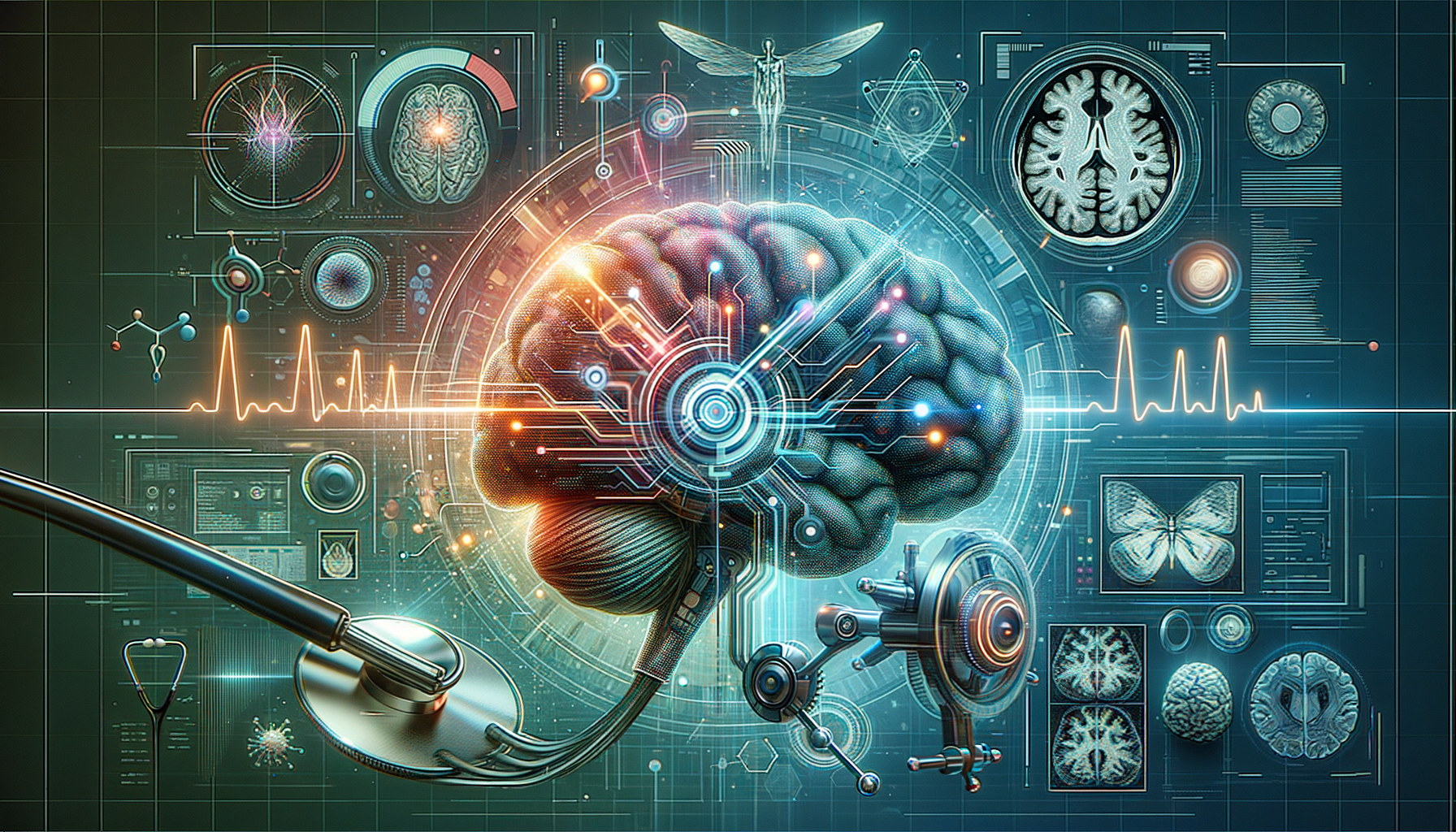
The Evolution of AI in Medical Diagnostics
As we stand in 2026, the integration of artificial intelligence into healthcare diagnostics has moved from theoretical discussions to practical applications, reshaping the landscape of medical science. This transformation is not merely incremental but rather represents a paradigm shift akin to the introduction of antibiotics in the early 20th century. Today, AI systems are central to diagnostic processes, enhancing the capabilities of healthcare providers by offering unprecedented accuracy and speed.
The journey of AI in medicine began with simple rule-based systems, but the real leap came with the advent of machine learning and deep learning algorithms. These technologies have enabled computers to analyze vast datasets with a precision that surpasses human capabilities, leading to more accurate diagnoses. For instance, AI’s ability to process and interpret medical imaging, such as MRIs and X-rays, has reached a point where it can detect anomalies invisible to the human eye, reducing diagnostic errors significantly.
Furthermore, AI’s predictive analytics is revolutionizing early diagnosis, particularly in diseases like cancer, where early detection significantly improves survival rates. By analyzing genetic, environmental, and lifestyle data, AI systems can predict the likelihood of disease onset, allowing for preventive measures. This is not only improving patient outcomes but also reducing the cost burden on healthcare systems globally.
Improving Accuracy and Efficiency in Diagnostics
The implementation of AI in diagnostics has led to a substantial increase in both accuracy and efficiency. In the past, diagnostic errors have accounted for a significant proportion of patient harm, often due to human error or the limitations of traditional diagnostic tools. AI, however, mitigates these risks by providing consistent, unbiased analysis. For example, AI algorithms used in pathology can identify cancerous cells with greater precision than human pathologists, who may be constrained by fatigue or cognitive biases.
Moreover, AI’s efficiency in processing information allows for faster turnaround times in diagnostics. In emergency settings, where time is of the essence, AI-powered tools can quickly analyze patient data and suggest potential diagnoses, enabling healthcare professionals to make timely decisions that could be life-saving. This is particularly beneficial in areas with a shortage of skilled healthcare workers, where AI can act as a force multiplier, augmenting the capabilities of existing staff.
Despite these advancements, the integration of AI in healthcare is not without challenges. Issues such as data privacy, algorithmic bias, and the need for regulatory oversight are crucial considerations. Ensuring that AI systems are transparent, accountable, and equitable is essential to maintaining trust and ensuring that these technologies benefit all segments of the population.
Future Prospects and Challenges
Looking forward, the potential of AI in healthcare diagnostics is vast and largely untapped. Innovations in natural language processing and computer vision are expected to further enhance AI’s diagnostic capabilities. For example, AI could soon be used to analyze patient interactions and extract meaningful insights from doctor-patient conversations, providing additional layers of data that could inform diagnoses.
However, the path to widespread adoption of AI in diagnostics is fraught with challenges. One significant hurdle is the integration of AI systems into existing healthcare infrastructures. This requires not only technological adaptations but also cultural shifts within healthcare institutions. Training healthcare professionals to work alongside AI tools is crucial to unlocking their full potential. Additionally, the ethical implications of AI in healthcare must be carefully considered. As these systems become more autonomous, questions about accountability and consent become more pronounced. It is essential to establish robust ethical frameworks to guide the deployment of AI technologies in a way that respects patient rights and upholds the standards of medical practice.
Despite these challenges, the trajectory of AI in healthcare remains overwhelmingly positive. As technology continues to evolve, AI’s role in diagnostics will likely expand, offering smarter, faster, and more personalized healthcare solutions. The promise of AI lies not just in its ability to enhance diagnostic accuracy but also in its potential to democratize access to high-quality medical care worldwide.
As we confront these exciting opportunities and complex challenges, the healthcare industry must embrace innovation while remaining vigilant to the ethical and practical implications of AI. The collaboration between technologists, healthcare professionals, and policymakers will be crucial in shaping a future where AI-driven diagnostics are an integral part of healthcare, enhancing the quality of life for patients around the globe. In this new era, AI is not just a tool but a partner in the quest for better health outcomes, urging us to rethink what is possible in the realm of medical science.